








Beginning Ranked Play - Your First Card
Author: Andrew ‘The Water Boiler’ Klawitter
What is the first card you would craft for each class?
All is Dust
When you begin playing Hearthstone, you are introduced to the dust crafting system. This is used as a means of trading in the cards you have opened in booster packs that you don’t want, and turning them into the important cards that are needed for the deck design of your choice.
Blizzard provides a free 100 Dust to create any Rare (or 2 Common) cards in the game at the onset of play. This allows a new player to create a card right then and there. But which card should you create? Obviously, if you aren’t looking at crafting for a specific class, there have been guides for best utility cards to craft, dating back to November of last year, and that list has hardly changed since.
That strategy is a valid one for the non-class-committed player, creating a versatile card that fits in multiple decks. But what if you have already decided which class you want to play? You will want to get a specific card for that class, to compliment the soulbound cards you currently have access to.
Here is the breakdown of my first cards crafted, and why, for each class:
Warrior
Acolyte of Pain - Card Drawing in Warrior is scarce. Plus the Acolyte will draw a card off the self inflicted wound from a Warrior’s Whirlwind, and pairs well with a bunch of other early minions. Health restoration effects, such as Voodoo Doctor or Darkscale Healer can yield reusability of the card drawing triggers later in the game. Buffing bonuses such as those provided by the Shattered Sun Cleric will grant extra health, and thus more card drawing, as well. Even minions that deal a single point of directed damage, such as the Elven Archer or Ironforge Rifleman, can be viewed in a new light. Providing an alternative use for those damage minions, since you can aim the directed point of damage at the Acolyte to draw cards.
 Shaman
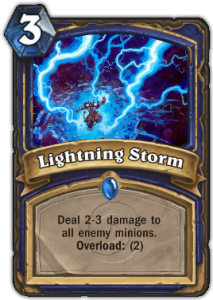
Lightning Storm - The shaman soulbound cards are missing a key aspect, the ability to remove multiple small minions from the board with a single spell. With the popularity of Zoo decks, this spell type, known as area of effect, is essential to any ranked play deck design. Dealing damage to low health minions hiding behind a pesky taunt minion, or clearing out those cheap little murlocs before they become too much of a nuisance. If you are worried about late-game potential, the storm pairs well with Spell Damage +1 minions, including one from the Totemic Call hero power, Wrath of Air Totem, to allow it to stay relevant when facing down slightly larger threats.
 Rogue
Rogue
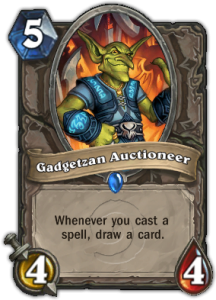
Gadgetzan Auctioneer - This was a tough choice, with specific core cards like Eviscerate and SI-7 Agent being some of the best Rogue precision damage effects. Ultimately, I landed on Gadgetzan Auctioneer as my first crafted card for Rogue. He is a perfect fit in any deck with a high spell count, especially when those spells have rather cheap crystal costs. While you can’t Conceal him yet, and you don’t have the broken Preparation card interactions of Miracle Rogue decks, I believe he is worth the early crafting to assist in learning one of the core aspects of Hearthstone, card advantage.
Paladin
Equality - The Paladin has a highly effective two card combination of Equality plus the the soulbound Consecration, this will clear all the minion, of any size or shape, on your opponents side of the board, (Including those pesky 8/8 Taunting Giants). Do you need more convincing? Even without Consecration, Equality will allow an army of Silver Hand Recruits to clear out an opponent’s more significant minion threats.
 Hunter
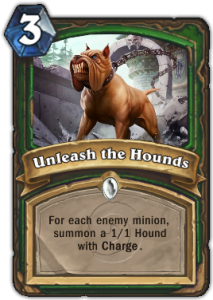
Unleash the Hounds - One part AOE (area of effect), one part card drawing, and one part burst damage, all parts good. Unleash the Hounds is at the core of a number of 2-card combinations, as it combines well with any of the Hunter’s soulbound beast-relevant cards, such as Timberwolf, Starving Buzzard, and Kill Command. Additionally, you can pick off a single high health minion using one of the hounds, by setting up with a Hunter’s Mark, providing an effective board clearing. Even at 4 cost, (before the dramatic change in crystal cost from 4 to 2 to 3, where it rests now), this card was effective at providing a solid mid-to-late-game utility for all Hunter deck designs.
 Druid
Druid
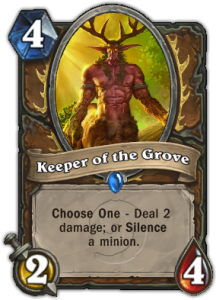
Keeper of the Grove - Allowing you to choose between silence or 2 damage might not seem like much, but it provides a significant counter-card to a majority of the early board threats currently available, (as well as those soon to come in the Curse of Naxxramas expansion). Silence is a core aspect of the game, removing buffs, deathrattle text, or even taunt. The ‘choose one’ mechanic of druid allows the card to always have uses. If there is not an ideal silence target, or if you are facing early threats, like a pesky Knife Juggler or Young Priestess, the 2 damage can remove a small minion, while also leaving you with a 2/4 minion of your own, the perfect answer to deal with multiple 3/2s.
Warlock
Argent Commander - This minion provides a few different roles in a warlock deck. Giving you a rush minion in aggressive decks to finish out the game. When you need a bit of board control, t
he Commander can act like a 4 damage removal spell which leaves behind a 4/2 minion after destroying one of your opponent’s. This card is almost guaranteed to require two of your opponents cards to effectively remove. When compared to the Doomguard, you are paying a little extra in crystals, but don’t have to worry as much about timing the play, since you won’t have that awkward discarding component, which tends to be something that new players can be uncomfortable with.
Mage
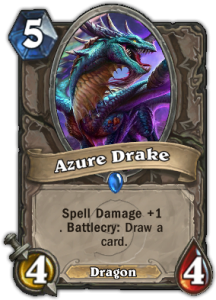
Azure Drake - For a mage, Spell Damage +1 cards could find their way into a deck without even thinking twice about it. The plain fact is, this card is as if we’ve mashed together the Novice Engineer and the Ogre Magi into a single card. A solid choice to fit into almost any deck, Spell Damage +1 and additional Card Drawing are especially effective combined with the Mage’s damage spell arsenal. Increasing the potency of many of your soulbound cards, or helping to dig for a solution to whatever minions were already played on the board.
Priest
Thoughtsteal - Why craft cards at all, when you can just play with the cards your opponents have already crafted! All kidding aside, the key aspect here is that you generate 2 cards, that don’t count against your deck total, effectively giving you a 31 card deck using a single Thoughtsteal. Both card advantage and deck advantage in one, to mitigate the disadvantages of card drawing. Thus preventing yourself from experiencing Fatigue faster, while still filling your hand with potent threats, courtesy of your opponent’s deck design.
Other Contenders
Here are a few non-class specific follow-up cards that I have found relevant as the 2nd or 3rd cards to craft.
Argent Squire and Leper Gnome are extremely useful 1 cost minions, that will give you a quick start in your game, while still not being totally useless in the later stages. Great for an Opening Move, or using a single extra crystal on a turn in the mid-game.
Ironbeak Owl is the cheapest Silence available to all classes, which makes it incredibly useful. Especially with the new Curse of Naxxramas expansion focusing on deathrattle texts, we can be sure to see a lot more of this little owl in the future.
Sunfury Protector and Defender of Argus can give Boulderfist Ogres and Chillwind Yetis taunt, which can be amazing utility for any beginning deck designs, and can provide great Burst Deck protection. The choice of which one to craft should be based on your decks crystal curve.
I Craft, You Craft, We Craft
Did you choose differently? What was the first card you crafted in hearthstone? Feel free to share your experience and defend your crafting choice in the comments section below!
SIMILAR ARTICLES








Personally i tell everyone the first cards they should craft is 2 harvest golems. They work in every single deck in the game that new players are going to play. secondly i’de say argent squire, loot hoarder and defender of argus, these cards again work in all new player/tempo decks and are very valuble for their rarity.
In terms of class specific i would say SI7 is better than auctioneer in rogue, especially seeing sprint is a free card you don’t need auctioneer when you’re not playing a miracle varient. ( mention mostly rogue as it’s my most played class as tempo/miracle/malygos/ghetto mana addict)
For mage i would say mana wyrmns strait up is one of the best cards. It’s a 1-3 for 1 mana already amasing ontop of the game breaking potential of turn 1 3-3. it’s too strong of a card to overlook.
Paladin i’m not sure. It’s the class i played the most when i started the game and i never like the idea of equality, once i got it however i understand it’s a very important card but aldor peace keepers i have always liked, only problem with aldor over equality is it wont disable say a ysera or deal with a board filled with murlocks. Kodo is also a viable pick for paladin as with a peace keeper or a humility you can remove a monstor from the board. but equality is a lot less combo dependant, obviously, as it only requires a token or a basic set card to use.
the rest i agree with except maybe warrior, i think armor smith is an amasing card, the down side being it’s a 100 dust craft over a 40 dust craft for the acolyte.