








Team IHearthU Deck Guide: DTwo Handlock
Team IHEARTHU: Twitter | Website
Sponsored by: Kinguin | 2P.com | Waypoint Media
IntroductionDTwo Handlock
 012223444455566891220
This is your standard Handlock deck. Obviously there are a few small differences between each Handlock deck, but they all operate the same way: get out the big guys and punish your opponent. Part of the reason for reintroducing this deck is because its place in the meta has shifted ever so subtly in the past month or so. In particular, the once-hopeless Hunter matchup now gives the Handlock player no less than a 40% win rate. That’s huge, because Handlock has so many even-to-favorable matchups that being able to take a chunk of games versus Hunter immediately makes Handlock one of the more dominant deck archetypes.
Key cards:
Obviously, what makes the deck are the four giants and two drakes, all of which are benefited by the Warlock’s hero ability. The release of Naxxramus saw players immediately insert Sludge Belchers into the deck, giving the deck both the five-drops it was lacking as well as more excellent defensive measures. Jaraxxus has also seen a comeback, as a card singlehandedly capable of winning certain control matchups. And double Ironbeak Owl is now almost standard, considering the plethora of silenceable targets (not to mention your own Ancient Watchers).
As far as the deck shown here is concerned, there are a few additions (and subtractions) worth mentioning. First, the one Mortal Coil, of which there are anywhere from 0-2 in Handlock decks. There are just so many situations where one damage is necessary, and it’s too painful to use a Soulfire. On the other hand, having two in your hand at the same time can be crippling because of the lack of options, particularly in the early game.

Loatheb: Loatheb is omitted from some Handlock decks, but it is such a key card versus Rogues and Druids (and is never really that bad in any matchup) that it is definitely worth adding over most other cards. Use it after a Gadgetzan conceal or before a potential Druid combo to save yourself. Or use it in its standard role: to snowball the game into a win after you’ve secured the board.
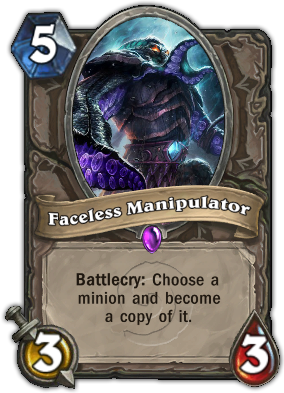 Faceless Manipulator: Faceless Manipulator, despite the lack of Leeroy Jenkins, still serves a great purpose by copying your biggest minions and providing yet another threat in your deck. Copy an untouched Giant or Drake, or even a Sludge Belcher in a desperate situation and it’ll pay dividends.
Siphon Soul: For a while, players omitted one copy of Siphon Soul, but it is extremely valuable in control matchups to take care of their biggest minions. In addition, Siphon Soul can help stabilize your health total in matchups against aggressive decks after you’ve stabilized the board.
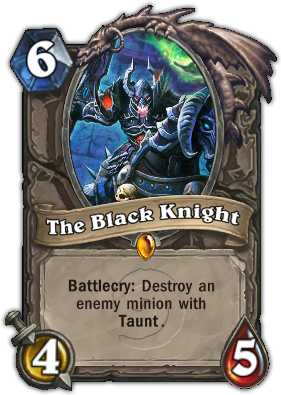 The Black Knight: The Black Knight is a nice single-target removal card, as almost every deck runs some form of taunt. That said, this is probably the most flexible card in the deck; if you want, put in an extra Hellfire against aggressive decks, or maybe a Sylvanas if you feel she can be more effective.
Ragnaros: Ragnaros seems like a somewhat greedy card, but it can be a backbreaker in matchups versus control or midrange decks when your opponent thinks he/she has already taken care of your threats. It even has a role versus aggressive decks: sometimes you’ll be put in a position where you’ve barely held on to turn 8, and Rag can be a last-ditch form of removal. Rag is also a great Faceless target.
Mulligan Guide:
Your mulligan will be completely different depending on the matchup. Versus non-aggressive decks, always mulligan for Twilight Drakes and Mountain Giants. However, if you have both Ancient Watcher and Ironbeak Owl, then keep them unless you’re playing against Rogue, Warrior, or Handlock. Against aggressive decks, mulligan for Hellfire, Ancient Watcher, Molten Giant, Ironbeak Owl, and Sunfury Protector and Twilight Drake if you have the other cards mentioned.
How to Play:
Against control decks, keep tapping until you can play a Twilight Drake or Mountain Giant on turn 4. If you have an Earthen Ring Farseer and you’re going second, you can trade your coin for a card by tapping on turn 1, since you have to play something on turn 3 anyway. If you are able to get a giant on the board, it is usually best to attack face, unless you have a very good reason not to (eg: your opponent will have enough mana for removal next turn, you’re about to die, etc.) Since many players run The Black Knight, only taunt a giant if it’s absolutely necessary. Finally, although it seems like a waste to play Jaraxxus before you can play your Molten Giants, it is often advisable to get Jaraxxus out whenever you have the opportunity to do so.
Against aggressive decks, mostly clear the opponent’s board until you can find an opening to get aggressive. Although your first priority is to stay alive, putting pressure on your opponent can put them on a clock and force them to trade into you.
How to Play Versus:
 Hunter: This matchup is all about the mulligan. Get Ancient Watcher and Ironbeak Owl in your opening hand, and suddenly the matchup is heavily in favor of the Handlock player. In general, try to play as many early minions as possible to prevent damage, because you will scale into better minions as the game goes on. Also, don’t be afraid of playing Earthen Ring Farseer before Molten Giants, as your opponent will usually oblige and get your health low enough in the next turn. Hunters typically aren’t capable of bursting you down without a board, so they’ll look to attack most turns, Molten Giants be damned.
 Shaman: Because of Earthshock and Hex, taunting a big minion in this matchup often won’t help you survive. Therefore, it is often correct to play Sunfury Protector on an early turn to help stabilize the board and give you time to play your big threats. As for Twilight Drakes, try not to play them unless you have nothing else to do, as Shamans will always keep Earthshocks versus Warlock.
 Rogue: This is one of the only matchups where you should keep Loatheb in your opening hand. If you can shut down Gadgetzan, then you typically win the game. The key to this matchup, though, is to not play scared. Now that Leeroy is no longer in most Rogue decks, it is usually correct to play aggressively. Playing too passively can give your opponent too much time, and allow them a miracle turn or two. Giving your opponent potential lethal given perfect cards can be scary, but playing to your odds will give you a better chance of winning in the long run.
Combos:
Ancient Watcher with its activators (Ironbeak Owl, Sunfury Protector, Defender of Argus, Shadowflame) are obvious combinations in this deck. Faceless Manipulator with any one of your scary minions is also useful. Don’t forget the Ironbeak Owl on Ragnaros possibility if you ever need to direct your eight damage. If you’re ever in a very dire situation, using Soulfire on yourself to activate Molten Giants is another potential play.
Budget Legendary Replacement Guide:
Although there isn’t a budget version of Ragnaros, he can can typically be replaced by a utility card, such as Hellfire or Acidic Swamp Ooze. The same is true for The Black Knight. Another option is to go for a high-impact minion, like Sunwalker. Unfortunately, there really isn’t a card like Jaraxxus in the game. If you don’t have the dust, you can play another Mortal Coil?
SIMILAR ARTICLES








You must be logged in to reply to this topic.