








Learning From Mistakes
(You can also comment at the bottom of this post, it will automatically synchronize with the forum thread, and vise versa)
ThatsAdmirable - Twitter | TwitchTV | Facebook
Playing against someone better than you can be a frustrating experience in Hearthstone. They always have the right card, they trade exactly how you don’t want them to trade, and every time you decide you need to go for a two-turn lethal, they have just enough damage to shore things up, and instead it is you who’s being lethaled — in one turn! To top things off, they slip in ‘Hmm … well-played,’ and the needle is just enough to set things off and send you spiraling into the tilt abyss, where you senselessly rage-queue with decks that you know are inferior, only to lose rank after rank.
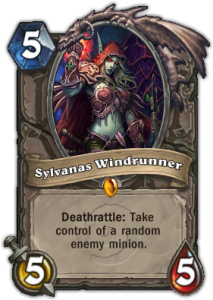
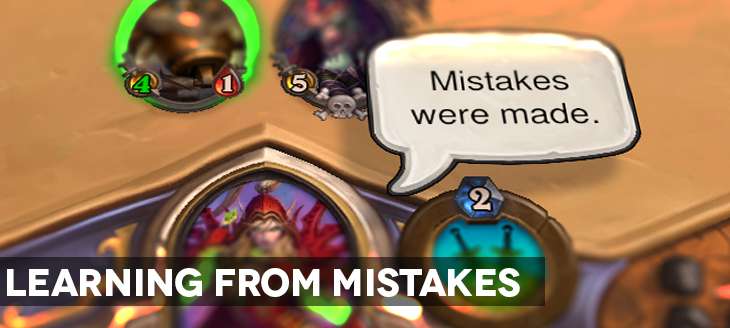
It had been a while before I really, truly felt like I’d been flat-out beaten at a game of Hearthstone. I used my mana inefficiently, I allowed my opponent to curve through Shattered Sun Cleric, Defender of Argus, and Dark Iron Dwarf by not making proper trades, and I played Sylvanas Windrunner with a slight board advantage and no threat of lethal, which was then countered by the Sylvanas my opponent had been patiently holding, waiting for the perfect time to unleash her. Things ended when I hastily attacked my opponent, leaving them at 1 health, only to be met with an Argent Commander from the top of his deck who was bound and determined to get to Northrend for lethal.
After the game, I took some time to think about what set me so far behind. Why did I lose this game? Was it the draw? Deckbuilding? Decision-making? Could I have squeezed in that one more damage? The answer was all of the above. I could have done everything better. I got outplayed. This was quite an impactful realization!
Oftentimes I’ll play a game where the draw is the main deciding factor – I’ll mulligan into cards that have large costs and not develop anything and get run over. It happens. I’ll simply shrug it off, realizing that draws do decide some games (that’s the nature of cards — or any game with an element of luck!) and not let it affect my emotional state. ‘I lost to my draw – what can I do?’ While that’s often a good mindset and a good step, it’s only a good mindset up to a point. Sometimes the main factor in your loss is your play mistakes. The truth — and the best mindset to have is: when you lose, it will always be a combination of draw and play mistakes; and those factors will vary in proportion to one another.
It’s true that I shouldn’t beat myself up about my poor draws; in any game of psychological complexity, where the human element makes replay value approach infinity, some losses are inevitable. But I — and you — too often err on the side of self-justification. In poker, an unlucky hand can result in a loss of significant amounts of money, and a mistake can result in a similar loss, over and over again. Sometimes, though, these two combine into a monstrosity that can stunt your growth and development if not correctly sifted through. Yet I — and you — will tend to self-justify after one of these beats: “There’s no way I should have been beaten,” or “What a disgusting lucky hand for them” — and the delusion will be proportionate to the emotional pain of the losing hand. What makes these thoughts so insidious is that there may even be an element of truth to them. This often leads to tilting or longer downswings or the old fallacy that luck is cyclical. Luck doesn’t have a memory. But you do. Groom it accordingly.
What I’m arguing is that I should still scrutinize my own play and look for ways I could improve my thought process. You’ll never improve at maximum speed or reach your maximum potential until you rise above results-oriented thinking and your own cognitive biases. This is the fun of card games, if not also life itself…
…So, how do we get to that point? It’s simple. Make a list of the mistakes you make. Do a self-review. Be ruthless. Throw out your babies. Fall out of love with the idea of your own brilliance. Have a friend brutalize your play; distance can lead to clarity.
Once you’ve made a list of 9,001 errors, it’s time to set some goals and pin down your biggest leaks first! They usually involve some basic questions:
- What should I mulligan, and why? How important is the early game in this match?
- Should I try to develop board position or use my other options to obtain card advantage? How likely is it that extra cards will win this game versus extra on-board presence?
- Should I trade minions or attack my opponent directly? Based on what’s already happened, how likely is my opponent to have something like Defender of Argus or Dark Iron Dwarf to create efficient trades for their benefit?
These questions are the beginning to the most common mistakes I see not only in myself, but in the players I coach. Hastily made decisions often have tremendous consequences. One poor trade could be more than enough for your opponent to find the time he or she needs to draw the right cards. I can’t tell you how often I’ve decided to attack my opponent directly when they’re out of things to do, only to see them draw Defender of Argus and proceed to have Justice demand retribution – which could have been avoided with a few points of health from my minions and a couple extra life on my opponent’s life total. In Magic, beginning players often overvalue life total, when they should be thinking about board position; the latter affects the former far more often than the former affects the latter. Since Hearthstone is still in its infancy, it goes without saying that this is a common bias here, too.
In games like Hearthstone, we often devote our study to advanced concepts, only to never truly build our skillset because our foundations are rotten. You can metagame and deckbuild as optimally as you want, but your results will continue to be terrible if you mulligan stubbornly, overestimate your own resources, and fail to grant your opponent the proper respect — of understanding why they make their decisions — that makes card games so fun and broadly applicable to life. Simple mistakes are often the most costly ones, and when we mulligan, develop, or trade poorly, we allow opponents whom we might otherwise outshine exploit our mistakes, leaving us in the position of having to get lucky. That’s what happened in this game, and that’s what will continue to happen when I face opponents who exercise superior, if also simpler, game play.
You give ‘em an inch, and they’ll take a mile. Hearthstone is no exception.
SIMILAR ARTICLES






Another great article! I’ll have to bookmark it and re-read next time I go on tilt. Learn from mistakes don’t repeat them!
I want to see you expand on each one of the three points you mentioned in future articles!!
1) What should I mulligan, and why? How important is the early game in this match?
2) Should I try to develop board position or use my other options to obtain card advantage? How likely is it that extra cards will win this game versus extra on-board presence?
3) Should I trade minions or attack my opponent directly? Based on what’s already happened, how likely is my opponent to have something like Defender of Argus or Dark Iron Dwarf to create efficient trades for their benefit?
I’d love to go into more depth, but it’s extremely relevant to specific context. The questions are the kinds of thoughts that can often work themselves out in the specific time, but do require experience a lot of those times also.
Trial and error is basically how it’s done - the point of these questions is to help minimize the error =P
Let me summarize for you:
“It depends. Practice.”
I’ve applied this article to learning the Warrior OTK deck, and have had a great deal of success afterwards. Good stuff!
Great article!
I’d love if you guys had an article series about common situations you end up in HS (by posting screenshot or similar) and then point out the different plays a player can do and what the correct decision would be based on if it is an arena situation or constructed.
I find myself in arena doing more “go for aggression” more times rather than trade because I rarely assume he has buffs that buff the minion on the board. I’m not sure it’s the correct thing to do but love to hear some input from you guys here by posting different situations and evaluating them.
Keep up the good work!
Papaz,
Good line of thought! That’s the kind of solution you should be looking for! If you don’t believe your opponent can favorably trade, weigh which is worth more - his minions or his life! Account for what you will do if he does have what you feel is unlikely, and if there’s anything you can do about it that doesn’t have too great of an opportunity cost.
I try to bring a wide range of ideas that can be applied to many situations across the board — to help people learn how to learn! =]
Give a man a fish…
Uh… what does tilt mean? I’ve seen it used a few times, but no idea what it means.
Tilt is when you let your emotions run rampant (usually frustration or anger) and allow those to cloud your judgment and thinking. It results in wildly unconventional plays without rationale and often yields costly consequences.
EDIT: Spelled a word wrong T_T
I published on my blog a resume of this article, in portuguese.
https://coracaopedra.wordpress.com/2015/03/29/aprendendo-com-os-erros/