








Racing vs. Trading: A Simple Guide
Author - Mike Tyminski On: Twitter
There are a lot of different factors that Hearthstone players need to consider when making decisions including: your life total, the board state, how many cards are in each players hand and what key cards have been used already in a matchup. Luckily, while there are a lot of things to worry about, decisions ultimately really boil down to one axis: offense vs. defense. In short, are you looking to race your opponent down to zero or are you looking to create incremental advantages until conditions are overwhelmingly favorable?
Damage Racing: Putting the pedal to the metal
Racing is the offensive side of the coin. When racing, the key question is often: can I put lethal damage on my opponent before he can return the favor? It is often the domain of aggressive decks to perform this task by applying substantial amounts of early board pressure, which is why these decks often play large numbers of inexpensive and efficient minions. As a general rule, if you’re racing your plays are going to lean towards attacking the opposing hero vs. the current board state.
So what conditions are going to make you want to race your opponent down to 0 health?
When you know you’re winning the race: This one should be a clear no-brainer, but just in case it isn’t blatantly obvious, if you’re winning the race there’s no reason to take your foot off of the gas. I’ve seen numerous games thrown at this point because opponents have wasted precious tempo attacking into an Acolyte of Pain in order to keep the board pristine when the three or four damage to the dome would have shaved a full turn off of the clock. When you’re ahead it’s typically much better to force them to answer you instead of awkwardly splitting your attacks on less threatening minions.
This sort of assessment tends to take a decent chunk of intuition, as it will ultimately apply to any deck not relying on a burst combo to win the game. These are the hardest decisions that come with playing a tempo or control deck involve knowing when to turn the corner and switch gears from defense to offense. Often times, however the switch comes after a sweeper spell or a turn of very profitable trading in board position.
When you HAVE to win the race in order to win the game: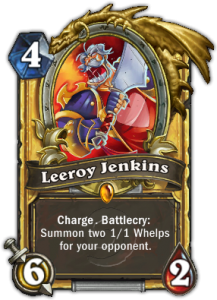
This is the sort of decision you’ll typically have to make early (usually it’s going to strongly affect your mulligans). Typically this decision will come against the most bursty or robust late game decks (decks like Miracle Rogue, Freeze Mage, and even a deck like Druid) that can obliterate you in one turn.
This line of decision making also is important for aggro decks as well. In this case it’s usually the result of one simple question: Can I handle whatever their plan A is based on the contents of my deck? If the answer is no and you’re not a dedicated control deck (which may be too slow), the best line of play in those instances is often to invalidate their major endgame threats by trying to end the game before they can play them. This is one of the key reasons for the existence of a deck like Backspace Rogue, which tries to jam in it’s burst combo before Miracle Rogue, Handlocks, and Druids can assemble their game winning board states.
When you can force an opponent into suboptimal trades: This one may seem a little counter-intuitive at first, but in some decks racing can actually make for some surprisingly profitable trading scenarios. Take a deck like Face Hunter as an example, a lot of what caused me to initially stumble against that specific deck was that is the way that Face Hunter ends up generating some of it’s advantage: because it is hyperfocused on the opposition’s life total, it can force an opponent to not only trade it’s 3 drop for a Wolfrider, but the trade will often also cost them the 3 life from the initial Wolfrider attack.
In these cases, you need to make sure that the board position is stable or the damage race is fairly even before trying to bait your opponent into these questionable decisions. If you are behind, this tactic will typically not work as your opposition will simply race you down faster and ignore the cards you have on the board.
Trading: Turning cards into time
Trading, on the other hand is the defensive side of the coin. When trading, you’re often looking to grind cards - either because you make more effective trades than your opponent or because you need to live to a certain point in order to function. It is often more midrange and control decks that like to trade, as they tend to run a higher curve and have greater amounts of defensively oriented cards. Typically when trading you are looking to buy time, and board considerations become critical as a result.
What conditions are going to make you want to force trades?
When you’re going to lose a damage race: This one should go without saying, but it’s typically a horrendous idea to start a race you can’t win (unless racing is the only option available like in a situation such as above). In these cases, it’s critical to start working down your opponent’s board in order to buy time or to turn a race into your favor: If your opponent is in a board situation where they have a Leper Gnome and a Knife Juggler and you only have out a Twilight Drake, you’re probably going to want to start using your drake to slow down the game a little and get a likely 2 for 1.
When you can consistently trade favorably with an opponent: Many of the midrange decks in
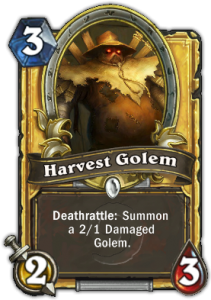 Hearthstone work because they can trade effectively on a routine basis and running your opponent out of cards. If your deck has a lot of 2-for-1 trades naturally loaded into the deck - cards like Bloodmage Thalnos, Harvest Golem, Argent Commander or even Argent Squire — grinding out your opponent will be an essential part of your game plan, and you need to adjust your strategy to maximize on these opportunities.
When you have to wait for a given turn before your deck can start it’s offensive game plan: Generally when this is the case you’re probably on a harder control deck or OTK deck of some variety. A shining example of this is a deck like Warrior Control, that tends to play a very high curve and a very high legendary count. When your plan A leans on cards like Gorehowl, Baron Geddon, Alexstraza, or Ragnaros, you’re going to want to play reactively until the point in the game when those cards can be safely put online.
When you are the “bigger” aggro deck: A surprising number of aggro vs. aggro matchups often revolve around just having the last threat standing - if you can run your 4/3 into their 2/1 and not really lose much tempo in the process it’s usually favorable to the bigger aggro deck. A strong example of this is the way that Zoo has to play against decks like Face Hunter and Aggro Paladin. In both of these cases the Zoo deck typically has the bigger minions (and to make matters worse, Zoo typically has to eat some damage in order to execute its plan) and so it often has to play a more card advantage oriented game plan in the hopes that it can force those decks to run out of gas and then take over the game with it’s superior minions.
This sort of decision making, however, is not firmly set in stone as you may come across situations where a matchup or a set of circumstances may dictate otherwise - for example, your opponent may have a slow draw in a typically fast deck and you might decide to put a little bit of pressure on them in order to force suboptimal trades.There may be a matchup like Miracle Rogue vs. Control Warrior, where you have to play a little more aggressively in order to ensure that the Warrior deck is low enough to be vulnerable to your combo.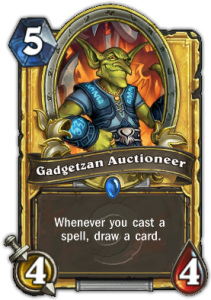
Similarly, there are a lot of tempo oriented decks that may flip back and forth multiple times between racing and trading in order to clinch a victory. These decks require stronger situational awareness in order to know when it’s ok to proceed and when one needs to slow down and handle the opposition’s threats. Control players often also need to know when to turn the corner, though their decision making tends to be a little more straightforward and tends to be built around the question: Is the board stable?
Hopefully, the above guide was useful in determining whether you should be looking to draw blood or blow up the board. With time, practice, and these basic principles, you too can be shooting up the ladder before you know it! As always, if you have any questions or comments, place them in the box below, and best of luck out there!
SIMILAR ARTICLES







You must be logged in to reply to this topic.