








Mana Curve in Arena

Ben Chapman On - Twitter
Drafting arena decks is a mixture of art and science. Before jumping into the arena, you will want a solid understanding of each card’s general power level. Power level will guide many picks in arena; as some choices are as simple as two cards are very weak and one is strong. If you don’t have a great grasp on the power level of the cards, I would recommend checking out arena pick orders or other guides that are readily available online. If you feel you know the power level of the cards, there are usually a number of picks in each draft which come down to other considerations not as straightforward as power level. The most important of these considerations has to be mana curve.
The easiest path to a train wreck arena deck is to have an imbalanced mana curve. Sometimes mana curve can even trump power level depending on how your deck is looking. Usually when you are making a pick due to mana curve considerations, you are taking a cheaper card. This is because many powerful cards tend to be more expensive, and you need a balance of costs. You should aim to have:
- 10 early game plays(1-2 mana)
- 12 mid game plays(3-4 mana)
- 8 later game plays(half five drops, half six+ drops).
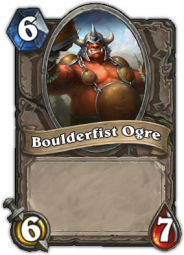 It is totally fine to skew a few picks in any of these directions due to the power level of the cards you open, but you need to keep your curve in mind as you go. Remember that primarily you need to pick cards based on power level. If I am midway through a draft with only a few cheap plays and am faced with a choice of Boulderfist Ogre and Goldshire Footman, I am still going to take the Ogre because, while cheap, Goldshire Footman’s power level is far too low to be picked over anything reasonable. In the same scenario, I would consider taking cards such as Bloodfen Rapter, River Crocolisk, and Acidic Swamp Ooze over the Ogre.
Once you get into the mindset of drafting a deck with a solid curve, you may fall into the trap of drafting too many cheap cards. It is just as important to have a robust late game as it is an early game in arena. This is due to the mana system in Hearthstone, which always increases by one each turn. If you have enough early game cards to trade and survive the beginning and mid stages of the game, you will eventually get to start landing 6+ drops which can be quite powerful. Many arena games come down to “topdecking”, or each player having an empty hand and whoever draws the more powerful cards typically ends up winning. If I am drawing Boulderfist Ogres, and you are drawing two and three mana cost cards, I will win these drawn out games. On the flip side, if you don’t have enough early and mid-game cards, you could get run over and the game could be over by turn six or seven.
A quick note on mulligans: While most experience players are already aware of this, I wanted to highlight here that mulligan strategy in arena almost always comes down to the cost of your cards. You want to mulligan most cards over three mana, and often you should mulligan to hunt for 2 drop minions so that you can have impactful plays early in the game.
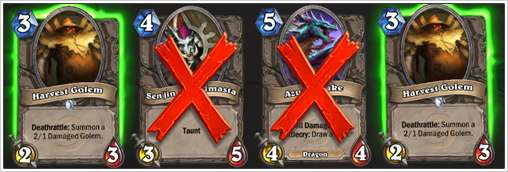
Individual classes can impact your draft strategy when it comes to mana curve. Three of the Paladin’s top cards cost four mana: Consecrate, Truesilver Champion, and Blessing of Kings. Given this, you should skew your other picks towards other mana costs if the power level of the cards is similar. For example, I would probably take a 3/2 or 2/3 for 2 over a Dark Iron Dwarf early in a Paladin draft for this reason.
The most powerful Mage cards also tend to be on the expensive side. Flamestrike, Fireball, Polymorph, and Water Elemental are all cards you want in high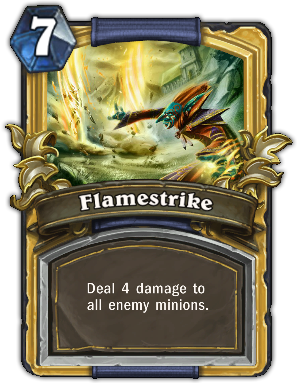 quantities. This means you will want to prioritize two, three, five, and six mana cards when you aren’t faced with one of these obvious Mage cards.
Rogues, on the other hand, have their most powerful cards on the cheaper end of the spectrum along with two five cost cards. Backstab, Eviscerate, Defias Ringleader, Deadly Poison, Assassin’s Blade, and Assassinate mean that you will want to focus on three, four, and six+ cost cards. Two drops do carry some additional value for Rogues as they can be solid plays that enable your Combo cards. Ultimately, I still find it important to have a robust late game with Rogue decks.
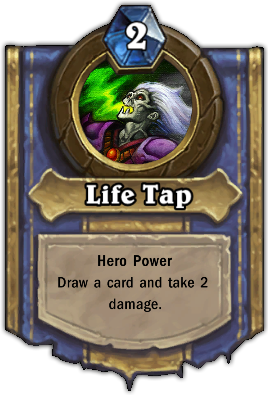 Warlock’s hero power synergizes well with cheaper plays as drawing extra cards is only powerful if you can deploy the cards in time for them to impact the game. You probably want to skew your picks to the cheaper end of the spectrum with Warlock decks.
Druid, Shaman, Hunter and Warrior class cards are a little more balanced cost wise, so I wouldn’t keep their powerful cards in mind when it comes to making picks based on mana curve.
The next time you fire up an Arena, try to keep your mana curve in mind as you go. Remember that power level is still key, but if you have a close pick, use your deck’s current curve to guide your choice. If you haven’t considered this before, I would expect that you will see a dramatic increase in your winrate!
Thanks for reading,
Ben Chapman
SIMILAR ARTICLES








You must be logged in to reply to this topic.